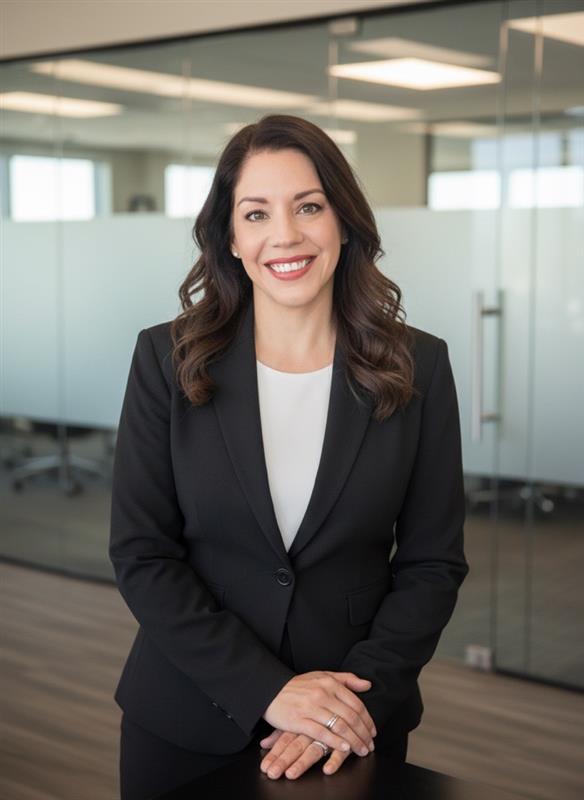
In 2019, Alicia Freeman was working in student wellness at the University of North Carolina at Chapel Hill (UNC-Chapel Hill), leading mental health awareness, substance use prevention and psychoeducation efforts for students. Then she learned that Behavioral Health Springboard, housed in the UNC School of Social Work, was offering Mental Health First Aid (MHFA).
After taking the course, Freeman realized MHFA offered an evidence-based way to strengthen and expand her existing work without building a new curriculum from scratch. Becoming a MHFA Instructor was an easy choice.
“Since Mental Health First Aid is about early intervention and prevention, it was just a perfect curriculum,” Freeman said. “Evidence based, and it was something already made, we didn’t have to create our own curriculum.”
Freeman planned to teach her first course shortly after spring break in 2020. Then the COVID-19 pandemic hit, lockdowns disrupted campus life and students moved online — just as the need for mental health support was growing.
As MHFA became available virtually, Freeman was among the earliest adopters. By the end of the year, she was teaching courses online — an early sign of the flexibility and determination that would shape her work in the years ahead.
Since 2022, Freeman has led large-scale MHFA implementation across UNC-Chapel Hill and North Carolina communities, helping train more than 6,700 new Mental Health First Aiders. In 2026, she was named MHFA Coordinator of the Year in recognition of her leadership, program strategy, partnership development and support for Instructors.
Expanding MHFA Training for Campus Mental Health at UNC-Chapel Hill
At UNC-Chapel Hill, Freeman’s work has helped make MHFA part of a broader approach to student mental health. The program has reached faculty, staff, students and campus partners, building a network of people who can recognize concerns and connect others to support.
Freeman said students are often among the first to notice when a peer is struggling.
“Our students are the first ones to notice that their fellow students are having a concern,” she said. “They don’t always know the best thing to do other than be there and listen.”
UNC-Chapel Hill uses MHFA for Higher Education, which is designed for campus communities and teaches participants how to recognize and respond to mental health and substance use challenges among students, faculty and staff. The training is intended for staff, faculty, coaches, resident assistants, student leaders and students.
The MHFA program at UNC-Chapel Hill has seen notable success and offers the training to the campus community at no charge.
Building Sustainable Mental Health Support Through MHFA
Mental health advocacy is not a side project for Freeman. She is also a Licensed Clinical Mental Health Counselor, Licensed Clinical Addictions Specialist and founder of Ascend Counseling.
“One thing that Mental Health First Aid helps me to do is to recognize the boundaries between when I’m in that clinical role and when I’m not,” Freeman said. That distinction is central to how she frames the training to new Instructors.
“I have found Mental Health First Aid to be such a complement for clinicians, because it allows them to recognize that they don’t have to save the world. You can’t save the world. You can’t treat everyone, but you can teach others to help.”
— Alicia Freeman
MHFA does not prepare participants to diagnose or treat mental health or substance use challenges, but helps them notice signs of a possible challenge, offer support and connect someone to appropriate resources.
“It helps to lighten the load on the participants to remind them that you’re getting this information to notice things and be the connector, not to carry the burden of this,” she said.
For Freeman, MHFA breaks down the boundaries between experts and everyday people, affirming that anyone can make a difference. You do not need a degree to change a life, she said.
Rural Outreach: Bringing MHFA to North Carolina Communities
Freeman’s work has also expanded beyond UNC-Chapel Hill. After state funding supported broader MHFA efforts, the university was able to offer Youth and Teen MHFA across North Carolina. The next phase will include expanding MHFA access to at least 15 colleges and universities across the state.
The work has also reached rural communities through UNC Whole Community Connections, a project that supported trainings in Edgecombe and Robeson counties. The project delivered 24 trainings for 449 participants over the past year and trained 30 Instructors in those communities.
“It helps to build capacity for mental health support in the community, because we’re noticing things earlier. We’re reducing stigma and increasing mental health literacy in our communities.”
— Alicia Freeman
Freeman said Instructor training is important to community sustainability. In rural communities, where funding, transportation and access to mental health professionals can present barriers, building local Instructor capacity can help communities continue training after a specific grant or project ends.
Freeman’s work in rural and tribal communities is informed by her own background. She grew up in Buckhead, a rural Native American community in Columbus County, North Carolina, and is a citizen of the Waccamaw Siouan Tribe.
“I have that personal experience of the challenges,” Freeman said. “That’s pretty much what put me on my career path to begin with — seeing the mental health and substance use challenges that I wanted to understand.”
Community connection is critical in resource-limited settings, Freeman said. Her community’s healing practices also inform how she thinks about mental health education, from crafting workshops to the Waccamaw Siouan Healing Green Space, a community garden where people can gather and work.
Seeing this information remove challenges to care for people from my own community, that’s what I’m most proud of,” she said.
MHFA Coordinator Role and Program Impact
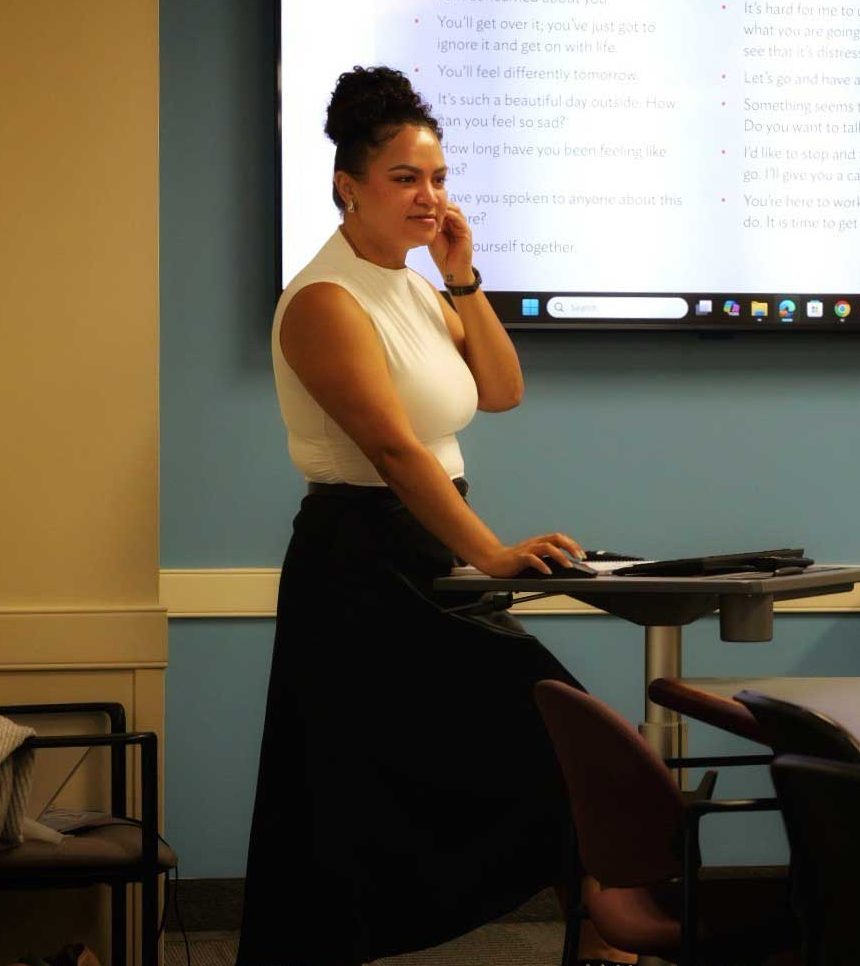
At the MHFA Summit in April 2026, Freeman received the MHFA Coordinator of the Year award. She said it was affirming after a challenging year shaped by tight funding and difficult decisions about how to sustain mental health programming.
“It was just really meaningful to have that acknowledgment and that award to say, ‘Continue doing what you’re doing because you’re doing the right thing,’” she said.
As a Coordinator and program manager, Freeman has focused on making MHFA easier for Instructors to deliver and easier for organizations to sustain. She said people do not always realize how much infrastructure is needed to maintain a program, from scheduling and registration to participant support, funding, evaluation and Instructor development.
“What I have been able to do as the program manager is build a foundation so that when folks have questions or when they’re ready to teach a course, it’s not quite so overwhelming,” Freeman said. “We start with: All you’ve got to do is show up and teach the course.”
With support from School of Social Work interns, Freeman helped create an Instructor support network, a learning collaborative, where Instructors can discuss course delivery, ask questions, find updated materials and connect with peers. She also helped create a peer support pod for people who have completed MHFA and want refreshers, updated resources, scenario practice or self-care support.
Community Connection in Mental Health Education
Freeman said her goal is for MHFA to supplement, not complicate, the work people are already doing in their organizations and communities. That means building networks, sharing resources and creating systems that make course delivery more manageable.
Freeman’s work illustrates the ripple effect MHFA can have when training is paired with local relationships, program infrastructure and sustained Instructor support. One Instructor can train a group of learners, those learners may support the people around them and Coordinators can help make the work repeatable.
“We have a workforce shortage when it comes to mental health professionals,” she said. “MHFA is a way to help people help themselves and also to get help earlier so that we can reduce some of those crisis situations.”
Freeman’s story shows how MHFA can grow from a single training into a statewide movement when it is driven by strong leadership, sustainable systems and meaningful connections.
Her work is a reminder that lasting change happens through people — neighbors, students, colleagues and communities — who are equipped to recognize, respond and support one another.