At a Glance
In the wake of the COVID-19 pandemic, schools and youth-serving organizations across New Jersey faced a challenge that had become more pressing than ever: how to better support their teens experiencing mental health and substance use challenges.
In 2021:
- 1 in 5 adolescents (ages 12-17) had experienced a major depressive episode within the last year (SAMHSA).
- 32% of youth in New Jersey reported their mental health was “not good” most of the time or always (NJ Department of Education).
- 42% of New Jersey high school students reported feeling sad or hopeless (NJ Department of Education).
From 2021-2023, the New Jersey Pandemic Relief Fund, through the Community Foundation of New Jersey, provided funding that allowed select schools and youth-serving organizations in the state to receive materials, training and support so they could offer Primeros auxilios en salud mental para adolescentes (Teen MHFA) training at no cost. The initiative, Protecting and Promoting the Mental Health of New Jersey Teens, aimed to equip thousands of teens with skills to recognize peers in distress and connect them to help.
The National Council for Mental Wellbeing worked together with communities around the state to bring Teen MHFA training to 35 different high schools and youth-serving organizations. As a result:
9,476
teens trained in Teen Mental Health First Aid.
90
Teen MHFA Instructors trained.
385
adults trained in Youth Mental Health First Aid.
15
Youth MHFA Instructors trained.
El desafío
Structure, Access and Stigma
In 2021, New Jersey schools recognized they lacked structured, accessible tools to support students’ mental health. Mental health stigma discouraged open conversations and help-seeking behaviors, so while school counselors could be effective, students often were reluctant to ask for help.
Educators and staff needed practical guidance, and students needed concrete skills to advocate for themselves and others.
Teen MHFA’s evidence-based curriculum teaches teens to recognize and respond to the signs of mental health and substance use challenges in their peers — equipping them to support each other and know when adult involvement is needed.
The course teaches teens to reach out to a parent, guardian or trusted adult, so offering MHFA Juvenil — which teaches adults how to help young people ages 12-18 — alongside Teen MHFA is essential to program success.
The New Jersey initiative offered the following training and resources to schools and organizations at no cost:
- Youth MHFA Instructor training
- Teen MHFA Instructor training
- Access to a state-specific professional learning community
- Training materials for at least 250 teens
- Youth MHFA training for adults from each school or organization
“Before taking the course, mental health wasn’t talked about that much at our school. And now I think that after taking the course, people are more open to talking to their guidance counselors or any other trusted adult.”
— Student
The Impact
How Teen MHFA Training Made a Difference
In the Teen MHFA course, teens learn to:
- Recognize the signs and symptoms of mental health and substance use challenges.
- Determine what they can and can’t do to support a friend during and after a mental health or substance use crisis.
- Use the Teen MHFA Action Plan (ROLE).
- Create and practice a self-care plan.
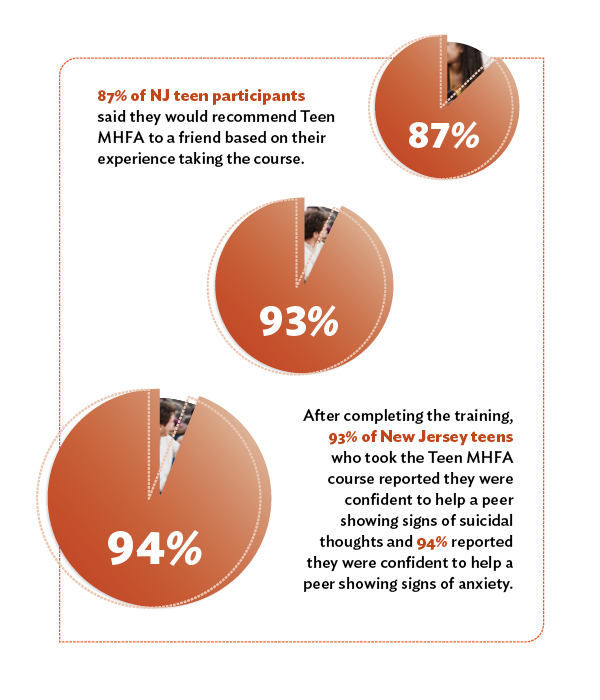
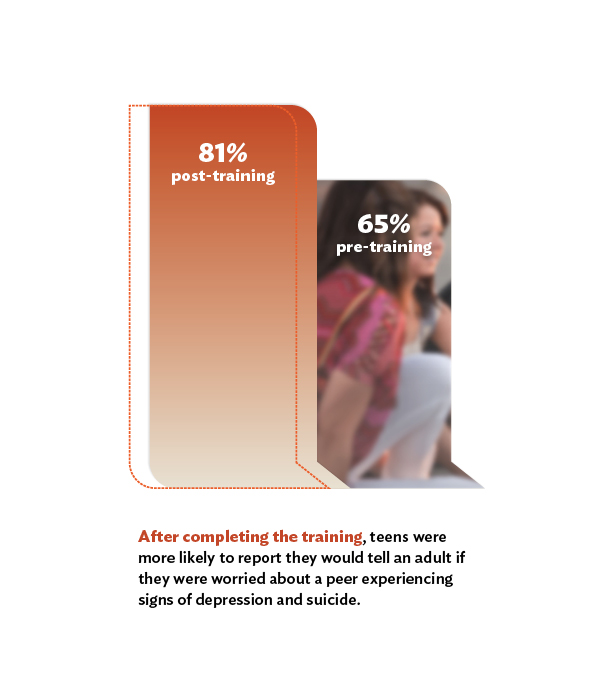
Pre- and post-training surveys were administered to measure the effectiveness of the New Jersey Teen MHFA initiative. These surveys showed that, after completing the training, teens were significantly more likely to take helpful, supportive actions and less likely to respond in ways that could be harmful or dismissive. For example, teens showed increased willingness to:
- At the same time, they became more willing to have difficult conversations and less likely to ignore warning signs.
- Ask a peer directly about suicide.
- Encourage them to seek professional help.
- Tell a trusted adult when they are concerned about a friend.
The Future
Sustaining Mental Health Education Beyond Grants
Many teens entered the program with a foundational understanding of mental health. What they needed most was not just awareness, but clear guidance on how to respond.
Teen MHFA filled this gap by providing a structured action plan and opportunities to practice supporting peers. The training reinforced and strengthened their ability to act, turning knowledge into meaningful skills.
To sustain their Teen MHFA programs after the initiative, schools searched for ways to expand and continue the training, including integrating the course into existing curricula like health classes and building it into broader, schoolwide mental health campaigns.
Schools that train their entire freshman class at once have a student body fully trained in Teen MHFA within four years, creating a sustainable, continuing mental health education that changes school culture.
A Model for Teen Mental Health Support Nationwide
The New Jersey initiative demonstrated that scaling mental health education is both possible and impactful. By training thousands of teens, the program created a network of young people equipped to:
- Recognize the signs of a mental health challenge.
- Start difficult but critical conversations.
- Connect their peers to support when it matters most.
Perhaps most importantly, it helped shift school culture, normalizing conversations about mental health and empowering teens to look out for one another.
As communities across the country search for ways to address the youth mental health crisis, New Jersey offers a clear example: Invest in young people, equip them with practical skills and build systems that support them.
The impact goes far beyond any classroom.
“I liked hearing about other teens’ experiences with mental health challenges because it gave me a real example and showed me how Teen Mental Health First Aid could actually help people.”
— Student
Sources:
- Substance Abuse and Mental Health Services Administration. (2022). Key substance use and mental health indicators in the United States: Results from the 2021 National Survey on Drug Use and Health (HHS Publication No. PEP22-07-01-005).
- New Jersey Department of Education. (2021). 2021 New Jersey Student Health Survey fact sheets.