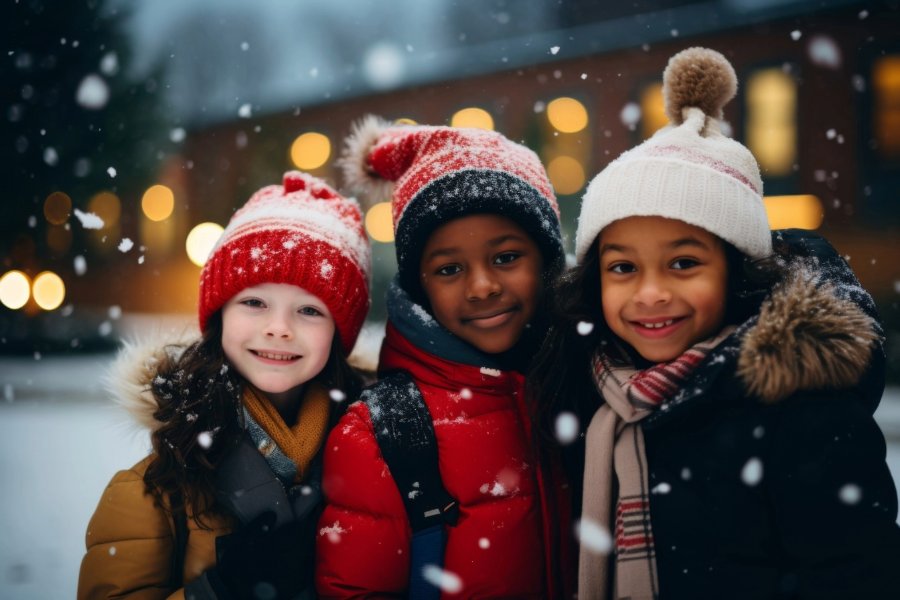
The holiday season can be a time of joy, togetherness and celebration with family — it can be magical for kids. But packed schedules, disrupted routines and big expectations can also create stress.
Here are five ways to help the young people in your life feel safe, supported and joyful during the holidays.
1. Model Self-care
Before you can help the children in your family, you need to help yourself. Keep your own sleep and downtime as consistent as possible — make time to take care of yourself. As you rest, relax and do things you enjoy, encourage your kids to do the same. Children benefit from routine and consistency, especially during “the most wonderful time of the year.”
2. Encourage Realistic Expectations
Part of having a stress-free celebration is letting go of the pressure to make the holidays “perfect.” Talk openly with your children about what matters most: connection, fun and time together.
3. Create Space for Emotions
Holidays can stir up excitement, sadness, stress or frustration — sometimes all at once! Let the young people in your life know it’s OK to feel all those feelings and talk through big emotions together.
4. Practice Active Listening
One of the best gifts you can give is your attention. Being present and listening nonjudgmentally — without trying to fix everything — makes a big difference.
5. Know When To Seek Help
If a child is showing signs of persistent sadness, withdrawal or distress, it may be time to reach out to a mental health care professional. Knowing when to take this step can be hard. Youth Mental Health First Aid teaches anyone who works or lives with young people to recognize and respond to signs and symptoms of a mental health or substance use challenge and connect kids to the help they need.
Mental health matters all year, but the holidays can be tough, even for children. Focus on mental wellbeing in your family tradition by getting trained in Mental Health First Aid. Explore course offerings designed to help you support the adults, youth and teens in your life. Over 4.5 million people in the U.S. have already become trained in Mental Health First Aid. Find out how you can become a First Aider today.